
Shawn Armstrong
Shawn R. Armstrong (born August 27, 1968) is an American author, musician, martial artist, gunsmith, firearms instructor, paranormal investigator, former professional wrestler, and retired soldier. Armstrong was born in Ilion, NY.
Early life
Armstrong attended numerous schools, some he attended twice, as his father moved often to find work. As a victim of bullying Armstrong began training from a family friend in Judo. He worked on the farms his father worked on, side by side. Later, his father began driving tractor trailer logging literally millions of miles, sometimes accompanied by his son.
Married Lorie Lawrence-Armstrong in June 24, 2002.
Career


Author
Author/Publisher · 2009 to present · Cortland, New York
Writers are involved in the creation and development of works of fiction and non-fiction.
This covers various forms of writing including:
• poetry;
• short stories;
• novels;
• life writing;
• scripts for theatre;
• screen and radio;
• non-fiction;
• magazine and newspaper articles;
• web-content.
New media is also opening doors for writers in areas such as mobile phone content and computer game scripts. Most writers work freelance and are self-employed. As income from writing may be low and erratic, most writers supplement their income with other related activities such as author visits, workshops, events and readings. Some writers may find avenues to diversify their writing and write in different forms, such as published novelists also writing reviews and literary criticism. In addition many writers manage their writing work alongside full or part time jobs which may be related to their writing (such as lecturing on creative writing courses) or entirely unrelated.
Typical work activities Typical activities are likely to include some or all of the following:
• researching the market including reading relevant publications or blogs, and staying up to date with writing that is being produced in your chosen field;
• selecting subject matter based on personal or public interest, or commissioned by a publisher or agent;
• undertaking background research including desk based research and conducting site visits or interviews;
• writing individual pieces, including using the technical skills of writing and being able to structure and plan individual projects;
• editing, revising and reviewing work especially in response to feedback;
• working to tight deadlines, especially for theatre, screen and radio;
• submitting material for publication in the required and expected format;
• networking with other writers, as well as others involved in the industry such as publishers, booksellers and organisers of literary events;
• liaising with publishers, agents, script editors, producers and directors;
• finding, pursuing and maintaining knowledge of publication opportunities;
• marketing including maintaining an online presence through a website, blog or social media presence;
• talking about your work at events and conducting readings or book signings;
• teaching writing in further or higher education settings or running workshops privately;
• critiquing the work of other writers including sometimes providing mentoring or coaching services;
• managing the business side of writing including maintaining financial records, checking contracts and submitting invoices and tax returns.
Career Definition Book publishers are responsible for overseeing the selection, production, marketing and distribution processes involved with new works of writing. Although book publishers can work for one of the many publishing firms throughout the country, there are several non-traditional avenues one can take to become a book publisher; authors can now self-publish, and individuals with a knack for finding marketable material can open up their own book publishing company. What's more, with the emergence of the Web, e-books and websites are becoming popular book-publishing alternatives.
Music
Rhythm Guitarist/Vocalist · 1986 to present · Cortland, New York
Rhythm guitar is a technique and role that performs a combination of two functions: to provide all or part of the rhythmic pulse in conjunction with singers or other instruments; and to provide all or part of the harmony, i.e. the chords, where a chord is a group of notes played together. Therefore, the basic technique of rhythm guitar is to hold down a series of chords with the fretting hand while strumming rhythmically with the other hand.
More developed rhythm techniques include arpeggios, damping, riffs, chord solos, and complex strums. Singers read and interpret musical compositions and apply their voice and style to create a song. Singers use one or more vocal ranges, such as alto, baritone, or bass in certain music styles, including folk, rock, country, gospel, jazz, or rap. Those working as singers might find employment as back-up performers for bands, commercial jingle singers, cruise ship singers, nightclub entertainers, or even vocal teachers. Most singers are self-employed or freelance artists who work contractually with recording labels, nightclubs, or concert tour venues. Singers work in recording studios creating albums
Military

Staff sergeant (SSG) is E-6 rank in the U.S. Army, just above sergeant and below sergeant first class, and is a non-commissioned officer. Staff sergeants are generally placed in charge of squads, but can also act as platoon sergeants in the absence of a sergeant first class. In support units, staff sergeants ordinarily hold headquarters positions because of the number of slots available for them in these units. Staff sergeants are typically assigned as a squad leader or company operations non-commissioned officer in charge at the company level, but may also hold other positions depending on the type of unit. Staff sergeants are referred to as "Sergeant" except in certain training environments and schools. The NATO code is OR-6.
The rank of staff sergeant in the U.S. Army, along with technical sergeant (renamed sergeant first class in 1948) and master sergeant, was created by Congress after the First World War. In 1920 the Army combined several company/battery/troop level "staff" NCO ranks, including color sergeant, supply sergeant, radio sergeant, eleven grades of sergeant first class, three grades of sergeant, two grades of master gunner, and assistant band leader into the new rank of staff sergeant. Staff sergeant, as did the ranks it combined/replaced, then ranked above sergeant but below first sergeant. At that time, sergeants served as section leaders, platoon guides, and assistants to platoon commanders (the position of platoon sergeant, nor a separate rank for the position, did not yet exist), and included several formerly separate ranks such as mess sergeant, company supply sergeant, and stable sergeant, etc. In 1940, staff sergeant became the rank title of rifle platoon sergeants and in 1942 rifle squad leaders became staff sergeants, with platoon sergeants then being promoted to technical sergeants. (Perrenot, 2009)
U.S. Army Armor
M1 Tank Crewman · 1993 to 2005
Basic Job Description The M1 Armor Crewman works as part of a team to operate armored equipment and fire weapons to destroy enemy positions. During combat, their role is to operate tanks and amphibious assault vehicles to engage and destroy the enemy. Tanks like the M1A2 Abrams use mobility, firepower and shock effect to close with and extinguish enemy forces. Duties performed by Soldiers in this MOS include: Assists in target detection and identification. Places turret in operation.
Determines range to target. Prepares range and sketch cards. Operates main gun controls and firing controls. Adjusts fires. Boresights, screen and zeros main gun. Fires main gun. Loads, fires, clears and applies immediate action on machine guns. Operates tracked and wheeled vehicles over varied terrain and roadways in combat formation and armor marches.
Uses and responds to oral commands and visual signals. Maintains orientation in moving vehicle by comparing terrain with maps. Selects tank routes. Positions vehicle in firing position. Secures battle position. Secures, prepares, and stows ammunition aboard tank. Loads, unloads, clears and performs misfire procedures on main gun. Exercises safety precautions in ammunition handling. Refuels vehicles.
Prepares radio equipment for operation and enters net. Operates internal communications equipment. Performs operator maintenance on turret, weapons, controls, and communications equipment. Assists in performance of unit maintenance of turret components. Performs preventative maintenance checks and services on tank chassis and automotive components before, during, and after use.
Prepares DA Form 2404 and maintains vehicle equipment folder. Assists in performance of recovery operations. Prepares tank for operations under various weather conditions and for night vision operations. Assists in construction of fortification and barriers, including minefields. Breaches and clears minefields and obstacles.
Performs duties shown in preceding level of skill and supervises subordinate personnel in performance of these duties. Assists tank commander in training tank crew. Prepares, files, and distributes operations maps, situation maps, and overlays. Reads and interprets maps and aerial photographs. Records information on maps and overlays. Indicates location, strength, tactical deployment, and emplacement of friendly and enemy units.
Marks vehicle routes on maps and overlays. Reproduces, distributes, and files operations orders and plans. Inspects tank turret and automotive components for malfunctions. Assists in the performance of unit maintenance of automotive components. Assists in maintaining the gunnery proficiency of subordinate gunners and loaders. Supervises ammunition resupply operations to include request, receipt, storage, inspection, and issue of ammunition with armor units. Training Information Job training for a M1 armor crewman requires 15 weeks of One Station Unit Training.
Part of this time is spent in the classroom and in the field under simulated combat. Some of the skills you’ll learn are:
• Tank operations
• Armor offensive and defensive tactics
• Map reading and scouting techniques
• Field combat strategy .
U.S. Army Infantry

Section Leader, Heavy Weapons Infantry · September 3, 1987 to September 30, 2010
Overview The infantry is the main land combat force and backbone of the Army. They are responsible for defending our country against any threat by land, as well as capturing, destroying and repelling enemy ground forces.
Job Duties
• Perform as a member of a fire team during drills and combat
• Aid in the mobilization of vehicles, troops and weaponry
• Assist in reconnaissance missions
• Process prisoners of war and captured documents
• Use, maintain and store combat weapons (e.g., rifles, machine guns, antitank mines, etc.)
Requirements
Those who want to serve must first take the Armed Services Vocational Aptitude Battery, a series of tests that helps you better understand your strengths and identify which Army jobs are best for you. Training Job training for infantryman requires 14 weeks of One Station Unit Training, which includes Basic Combat Training and Advanced Individual Training. Part of this time is spent in the classroom and part in the field.
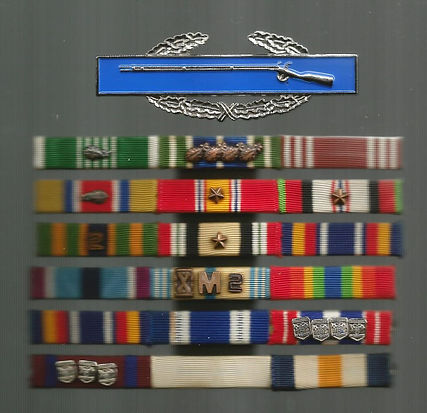
Awards
Afghanistan Campaign Medal w/Campaign Star
Army Commendation Medal (3rd Award)
Army Achievement Medal (5th Award)
Army Good Conduct Medal
Army Reserve Components Achievement Medal (6th Award)
National Defense Service Medal (2nd Award)
Global War on Terrorism Service Medal
Humanitarian Service Medal
Iraq Campaign Medal w/ Campaign Star
Non Commissioned Officer Professional Development Ribbon
Army Service Ribbon
Overseas Service Ribbon
Armed Forces Reserve Medal w/ M Device (2nd Award)
NATO Medal
Combat Infantryman Badge
Driver and Mechanic Badge with Driver - Wheeled Vehicle(s) Clasp
German Armed Forces Badge - Gold
New York State Long and Faithful Service Medal (5th Award)
New York State Defense of Liberty Medal w/ WTC Device
New York State Medal for Merit
New York State Aid to Civil Authorities Medal
New York State Exercise Support Ribbon
Humane Service to New York State Medal

US Army Retired
Retired · September 3, 1987 to September 3, 2010
Martial Arts
Armstrong Kenpo Karate Academy
Owner/Instructor · 1980 to 2009 · Cortland, New York
Requirements The specific requirements for martial arts instructors depend on the school. In most cases, instructors must hold a black belt in their art before becoming a full instructor. They must be able to correctly demonstrate the techniques and teach them to students in a safe way. In addition, instructors must know the history, traditions and values of the martial art so that they can pass these on to their students. In some cases, advanced students who are not black belts can begin assisting the head instructor and teaching beginner students.
Instructors must also communicate clearly and be comfortable and confident teaching large groups. Ideally, they will know basic first aid to handle injuries that might occur in class. Duties and Responsibilities Martial arts instructors must plan classes and tailor them to the skill level of the students. Classes might include teaching new techniques, practicing strikes on pads or heavy bags, sparring, meditation, stretching, conditioning and discussing the history or philosophy of the art. Instructors should be available before and after class to speak with students, answer questions and make sure students are on track to reach their goals. Instructors also administer exams for students to advance to the next belt level.
Instructors will often travel to competitions to coach students. In many schools, instructors also handle administrative duties such as calling and enrolling prospective students, monthly billing, and maintaining inventory of uniforms, belts and other training equipment and gear. Related Reading: How to Discuss Your Job Description With Your Boss Working Conditions Martial arts instructors typically work in a martial arts studio or dojo. Some classes are run in community centers or gymnasiums. They usually work in the afternoon or evening, although some schools also offer morning or lunch time classes.
They also often teach classes or attend competitions on the weekends. In addition to time spent teaching, instructors must devote time to their own training. Certification Certification requirements vary by martial arts school. Some schools do not require certification beyond belt rank and ability. Many schools have their own certification program or instructors course.
Others may require a national certification from an organization such as the American Martial Arts Certified Professionals. Certification programs usually include training in teaching techniques, philosophy and tradition, first aid, conditioning, and stretching techniques Kenpo is a Japanese unarmed fighting art that was brought from China to Japan about 700 years ago by the Yoshida Clan and was quickly adopted by the Komatsu Clan. The word Kenpo means literally, "Fist Law," and also refers to its Chinese origin. The Japanese adaptation of this Chinese style was well suited to defend against the various unarmed Japanese martial arts of the 12th century. Few modifications were required for Kenpo to overcome the new unarmed systems that developed over the next 7 centuries that came to be known as Karate (Japanese of "Empty Hand").
But for the Yoshida and Komatsu Clans who developed their art into a truly Japanese style, the term was simply Kenpo. During this same period the Chinese system from which Kenpo was derived underwent so many changes that, while most of the Kenpo techniques can be found scattered among the hundreds of Chinese fighting systems, there is no single system in China today that resembles Kenpo. "Chinese Kenpo" is a term coined by Ed Parker in 1960, when he found there was no kung fu style that resembled Kenpo. But adding Chinese forms and Chinese terms did not change the nature or Japanese origin of Kenpo. It has, however, imbued the "Chinese connection" with an "ignorance is bliss" mentality.
One of Ed Parkers students at the time was Jerry Meyers who went on to train with Bruce Lee and Danny Inosanto, and combined their style with Kenpo to make it a true Chinese Kenpo style. 90 years ago Kenpo was so well known as an effective fighting art in Japan that many Japanese styles that had no connection with Kenpo claimed their art was derived from Kenpo. Some even went so far as to claim their masters had training directly under Chinese Kenpo masters. Similar claims have continued to this day, even though there has never been a Chinese Kenpo master; nor has there been a master of the Chinese style that gave rise to Kenpo in centuries. What's even more ridiculous are the Korean schools that claim to teach Kenpo as part of Tai Kwon Do.
This Chinese Kenpo is not to be confused with the styles developed by Kenpo students who went on to train with Bruce Lee and created their own systems of Chinese Kenpo. Kenpo was brought to Hawaii shortly after the turn of the century by Great Grand Master Kiyoka Komatsu. In 1920 her 3 year old son, James Mitose, was sent to Japan where he was raised by his maternal grandfather, Great Grand Master Sakuhi Yoshida. There he studied Kenpo and became the first Mitose to Master the Komatsu/Yoshida art of Kenpo. His father, Otokichi Mitose, never trained in Kenpo, or any martial art for that matter, and since his son was sent to Japan when he was only 3 years old, Otokichi Mitose had no influence on his training.
James Mitose returned to Hawaii after his father's death in 1936, then after the Japanese attack of Pearl Harbor, James Mitose began openly teaching what he called Kempo Ju-Jitsu, though the spelling was later changed to Kenpo Jiu Jitsu. Great Grand Master James Mitose, was the ranking Kenpo master in Hawaii in 1942, and with the exception of his sisters, Great Grand Master Fusae, and Shizue, the other eight Kenpo Grand Masters, and four Masters, did not teach openly. However, Grand Master Sadake Takamori and Grand Master Matsuichi Yamashito did teach exclusively to close members of the Hawaiian Japanese community. Mitose retired in 1953, and his Head Instructor (and first Shodan), Thomas Young, took over his club. This left Shizue and Fusae as the ranking Great Grand Masters of Kenpo, but neither taught openly as their brother had.
In 1959, Fusae took on a single non Japanese student, and awarded him the rank of Shodan/Instructor and then Sandan in 1961. NOTE:"Kenpo", while spelled with an N is pronounced Kempo (with an M); and either kenpo or kempo is acceptable. The general rule for Japanese to English translation is, when N is followed by P, the N is pronounced M. There are some who claim the spelling was changed from Kenpo to Kempo by one master or another. This is true.
Some instructors wanted to distinguish their style from Kenpo, and some changed from Kempo to Kenpo when they learned what the more acceptable spelling was. Often, however, Mitose's students spelled Kenpo as Kempo, because that's the way is sounded. One of Mitose's top students was William, "Willy", K. S. Chow, who became Mitose's second Shodan (black belt) and Assistant Instructor; although Chow was actually promoted to Shodan by Thomas Young who was Mitose's first Shodan. After being promoted to the rank of Instructor William K. S. Chow taught with Mitose and Young until mid 1949 (May/June), when he opened his own Kenpo club and called his style, "Kenpo Karate". In doing so, Chow is rightfully credited as being the founder of Kenpo Karate, although the term, Kenpo Karate, had probably been used as early at the 1920 in promoting karate demonstrations. By adopting Kenpo Karate, Chow distinguished his system from Mitose's Kenpo Jiu-Jitsu.
Kenpo Karate and Kenpo Jiu-Jitsu where, however, virtually identical except for forms, or katas. There were no forms in Chow's Kenpo Karate, while Kenpo Ju-Jitsu had four katas, Nihanchi 1 & 2, the Bear Kata and Old Man Kata. Paul Yamaguchi had originally trained with Henry Okazaki before going to James Mitose, where William Chow was his instructor. When Chow opened his own club in 1949, Yamaguchi went with him and received his Shodan from Chow in 1950. Mitose, however, refused to recognize the rank, and Yamaguchi went back to study with Mitose where he received his Shodan that same year, and two years later, (1952) he received the rank of Head Instructor.
This was a blow to Chow, as Paul Yamaguchi, his student, now had a higher rank (Head Instructor) while he was only an Instructor. But there was more. Not only was Yamaguchi a higher rank than Chow, but Mitose had refused to recognize Chow's Shodan rank. A Shodan could promote Shodan's because Shodan was the only Kenpo black belt rank at the time. However, only Mitose could make a Shodan an Instructor.
Chow avoided this instructor problem by taking the title "Professor", which is the title Professor James Mitose had given himself. Chow then renamed his system, "Go-Shinjutsu", (sometimes spelled Go-Shinjitsu) which he said was the name Daruma had called his original system in 525 A.D. The name is, of course, Japanese, but Go-Shinjutsu is the name Professor Chow used on the 1953 Shodan certificate of his top student, Masaichi Oshiro. Oshiro, however, received his Instructor rank from Mitose, which was granted without the objection Mitose had to Yamaguchi.
It should also be noted that James Mitose used the term Go Shinjutsu to mean the Art of self-defense and Mitose only attributes the Kenpo style, and not the name Kenpo to Daruma.
NOTE: Mitose's title was "Professor" Grand Master, Great Grand Master and the like are not titles in Kenpo, but are used as signs of generational respect.
Mitose only called himself "Professor" while he was teaching in Hawaii. Once he moved to the Mainland he developed the "Master" ranking.
NOTE: Professor Chow continued to call his system Go-Shinjutsu into the 1960's and made a slight change in the name to "Go-Shinjutsu kai" (kai meaning school) in 1959, and that was the name that appeared on my 1961 Shodan certificate. Some time later Professor Chow began to use the name "Kara Ho Kenpo", and although some of his later students would claim Kara Ho was Chow's original system, Professor Chow did not call his system Kara Ho when I studied with him, and there is nothing in writing that uses Kara Ho before the 1970's. My 1965 Godan certificate signed by Professor Chow awarded me "Kenpo Karate Godan Hawaii Go-Shinjutsu Kai". There has been a great deal of criticism of James Mitose's Kenpo abilities. If, as some claim, Mitose was so inept, then one has to ask why so many of Henry Okazaki's students came to train with Mitose.
Okazaki and Mitose were close friends, and Okazaki is, even today, considered to be one of the greatest Jiu Jitsu instructors in Hawaii. Both Professor Chow and Sonny Emperado have told me that Mitose was the best Jiu-Jitsu instructor in Hawaii. It would be wise for those who claim a Kenpo heritage to heed the claims of those who know, and put aside their petty disdain for someone who was not their instructor, and about whom they have no personal knowledge. There is an obscure insight into Mitose told me by his sister, and that is that Mitose founded the White Tigers at the beginning of the Second World War and was held in high esteem and honor by the United States government for this. Adriano (Sonny) Emperado was Professor Chow's top student when he and his brother Joe Emperado left Chow in late 1950 to create "Kajukenbo" with Frank Ordonez, P.Y.Y. Choo, Joe Holck and Clarence Changhis. Ed Parker began his Kenpo training with Sonny Emperado where he trained for two weeks before going to learn from Professor Chow in 1952.
Another Mitose Shodan, Edward "Boddy" Lowe had originally trained with Okazaki before going with Mitose. In 1952 he became a devoted student of Mas Oyama, and trained with him in Japan before returning to Hawaii where he opened the first Kyokushin Kai (school) in 1959. In March 1953 another Young/Mitose Shodan, Paul Pung, was promoted to Head Instructor by Mitose, and moved to San Francisco where he opened the "Paul's Karate" school. This was the first commercial Kenpo school (Mitose style) on the mainland. Paul's Karate had its own building and was open to the public and held classes four nights a week.
NOTE: The first commercial Karate school in the United States was founded by Robert Trias in Phoenix, Arizona, in 1946, and the first karate organization was the United States Karate Association (USJA), founded by Trias in 1948.
There was some controversy over who had the first commercial karate school in the United States until the late 1970's. This was mostly fueled by Ed Parker students who were claiming Ed Parker was the first to teach on the Mainland. That argument was put to rest the Chief Justice of the Arizona Supreme Court, stepped forward and stated that he had begun training with Trias in 1947.
NOTE: Paul Pung, not Ed Parker, was the first to open a commercial Kenpo school on the mainland which was in 1953.
Ed Parker was still in the Coast Guard until August, 1954 and did not start teaching commercially until 1956. Again, many ignorant Ed Parker students make the false claim that Ed Parker was the first. In 1955, Masaichi Oshiro left Professor Chow and opened the "Go-Shin-Kenpo Club", which was a variation of Professor Chow's Go-Shinjutsu Club; and the following year, (1956) he changed the name to the "Te-Ken Jutsu Kai," (hand-fist jutsu school). Then in 1959, Oshiro went to Japan to train in Goju-Ryu under Gogen Yamaguchi. It was at this time that Chow created the "Go-Shinjutsu Kai", (adding Kai to the name) with Bill Chun, who was his highest ranked black belt student at the time and who had been made Instructor by Mitose.
Ed Parker, was a Judo Shodan by the time he was 18 (1949), and took his first Kenpo lesson at Adriano (Sonny) Emperado's club when he was in the Coast Guard in 1952. Ed Parker trained with Emperado for two weeks before going to train with Professor Chow. This is of course quite different from what Ed Parker has written and from what I had previously written. But after asking the right questions of the right people, it is now time to set history right. To do this, I have set out the history by the years that marked great change in Kenpo Karate.
Armstrong Dragon Kenpo
Introduction
The art of Dragon Kenpo is a method of empty hand and foot fighting based on the scientific use of the body in self-defense. The instruction in Dragon Kenpo is designed to provide you with the ability to coordinate your mind, body and spirit into an efficient weapon. Moreover, you will find that Dragon Kenpo stresses development of individual character, integrity, and respect for others. As individuals advance in the art they realize that Kenpo is a way of life. They gain a new way of thinking and acting which can guide them in all areas of life so that you will be happier, healthier, and wiser. The methods and techniques of Dragon Kenpo are only a guide to illustrate various principles and scenarios; only real practice and the experience you gain will teach you how to use your hands and feet in such a manner that you will be able to defend yourself from an armed or unarmed opponent. Hard work is always the key to success.
The Dragon Kenpo Creed
The classical martial arts present themselves as rivals. One a "hard" style, the other "soft". This one emphasizing kicks, that one specializing in punches, the other takes each opponent to the ground and wrestles. Yet the underlying premise is the same for each, in that a narrow system is presented as not only superior but holy. Laws are laid down, rituals are set in stone and rigid patterns are put in place. A shrine to the fixed knowledge is created, complete with ceremonies, rites and masters. None may transcend, or even question the institution's unbending view of reality because of its sacredness.
The Dragon Kenpo way, however, is the way of never ending learning and discovery. The techniques taught are guides that develop greater skill, not boundaries that no one may cross. Greatness, after all, is not achieved by thinking within limits prescribed by convention. Greatness required engaging the unknown. It is there, in the mystery, that new discoveries are found.
The traditional arts are in the business of setting limitations. Their primary task is the creation of an imposed order and the production of conformity. Yet to adopt that order is to close out everything not included within it. By banishing the unknown the traditional martial artist advance by learning more and more about less and less. To the "Masters" of the traditional styles, an unlimited mind is a dangerous thing. A lot of folks have a lot invested in the status quo. Those who choose growth and expansion should not be surprised to find resistance from those devoted to tradition. Choosing to cross boundaries, or even erase them, means coming into conflict with the imposed order.
There are no rules in total combat, so the Dragon Kenpo way is the path of free expression. The methods taught begin the process of endless discovery. We have only two choices are martial artists and as human beings: To be ordinary or to be explorers; to be followers or leaders. Regardless of who approves.
History of Dragon Kenpo
Dragon Kenpo was organized by Ed Hutchison and has been continued and evolved by various practitioners today and there are several offshoot styles that owe their roots and lineage to Dragon Kenpo. To understand Dragon Kenpo we need to look at the roots of its origin and where it comes from. Kenpo legends trace its origins to the Shaolin Temple, in my opinion this is most likely southern shaolin, or perhaps styles from the Guangdong and Fukien provinces in China, as many elements of these styles can be seen reflected in Kenpo. Styles from these areas include what is generally termed Hakka Kuen, and styles like White Eyebrow, Dragon, Southern Mantis, even styles like Choy Lee Fut, Mok Gar, Chow Gar and a host of others share similar elements to Kenpo. Many of these Chinese styles claim origin in the 5 elders of Shaolin, many bear relation to the 5 families Hung, Lau, Choi, Lee, Mok, and many of these also contain the 5 animal styles tiger, crane, snake, leopard, and dragon.
Chinese boxing from Shaolin and styles from other regions made its way from China to Okinawa and Japan, and eventually to the United States. In Hawaii a man named James Mitose taught Kosho Ryu Kempo, one of his students was a man named William Kwai Sun Chow, Chow learned his family art of kung fu before becoming a student of Mitose. William Kwai Sun Chow blended the Kosho Ryu Kempo of Mitose with his family style of kung fu, eventually calling his system Kara-Ho Kempo. Notable students of William K.S. Chow were Adriano Emperado, one of the founders of Kajukenbo, and Ed Parker the founder of American Kenpo. Ed Parker's Kenpo has many variations from his students who have put their own imprint onto Kenpo, such as Al Tracy and Jay T. Will. Ed Hutchison learned Kenpo from Jay T. Will who studied under both Ed Parker and Al Tracy. Dragon Kenpo as organized by Ed Hutchison has continued by various students and within several offshoot systems as a streamlined self defense art that naturally incorporates aspects of Kenpo but also includes elements of other martial arts such as Jeet Kune Do, Kali, and Thai Boxing that fit the simple, direct, and efficient street fighting goal.
Dragon Kenpo Structure and training
One aspect that sets Dragon Kenpo apart from the Kenpo systems that are its roots is the lack of forms, common solo forms like those found in American Kenpo for example, have been removed from Dragon Kenpo practice. Although, the study of these older forms can be beneficial to the Dragon Kenpo practitioner. In the Dragon Kenpo as organized by Ed Hutchison, while not having forms, there were a series of standardized techniques presenting possible solutions to common street attacks like sucker punches, grabs, chokes, punches and kicks. These techniques were spread out through a system of colored belt ranking and several degrees of black belt. While these techniques were standardized to allow for some sort of grading structure and measuring of a students’ progress, these techniques ware not viewed as a final product but rather as a point of departure for the practitioners own self-study and exploration (refer to the Dragon Kenpo Creed above). While choreographed forms like those found in other Kenpo styles are not found within Dragon Kenpo, many practitioners do string together techniques for practice in a freestyle shadowboxing manner and therefore the same benefits of forms practice can be gained without the practitioner being confined by the limitations of a set pattern.
Many practitioners of Dragon Kenpo today and those systems derived from it have incorporated the weapons methods and energy training drills from the Filipino martial art of Kali (arnis, escrima, silat, kuntao also) as well as ground grappling skills, elements of Jun Fan kickboxing and Jeet Kune Do, Thai Boxing and other combative arts. Dragon Kenpo practitioners prefer hard, realistic fighting over the sport oriented forms of sparring, living by a motto of "if you want to fight hard, you'd better train fighting hard".
Dragon Kenpo as it stands today is a unique expression of a martial art customized by each individual practitioner. While Dragon Kenpo respects its lineage and pays tribute to the arts upon which is it founded, it maintains its independent stance as a unique system of martial arts.
Belts Earned
Dragon Kenpo Karate - Third Degree Black Belt
Sun Chong Taekwondo - Yellow Belt
Jun Fan Gung Fu/Jeet Kune Do - White Sash
Koei Kan Karate Do - Green Belt
Judo - Brown Belt
Awards
Bronze Medal Koei Kan Karate Do Tai Kai 2014
Professional Wrestler

Trained by Gino Caruso
East Coast Professional Wrestling
Wrestling Name: The Perfect Weapon Shawn Armstrong
Professional wrestling (colloquially abbreviated to pro wrestling or wrestling) is an athletic form of entertainment based on a portrayal of a combat sport. Taking the form of live events held by touring promotions, it portrays a unique style of combat based on a combination of adopted styles, which include classical wrestling, catch wrestling and various forms of martial arts, as well as an innovative style based on grappling (holds/throws), striking, and aerialism. Various forms of weaponry are sometimes used.
The content including match outcomes is choreographed and the combative actions and reactions are executed in special manners designed to both protect from, yet simulate, pain. These facts were once kept highly secret, but they are now openly declared as the truth. By and large, the true nature of the content is ignored by the performing promotion in official media in order to sustain and promote the willing suspension of disbelief for the audience by maintaining an aura of verisimilitude. Fan communications by individual wrestlers and promotions through outside media (i.e., interviews) will often directly acknowledge the fictional nature of the spectacle.
Although the combative content is staged and communicated between the wrestlers, there are legitimate physical hazards resulting in serious injury and death in limited cases, due to the realism and contact involved in the performance.
Paranormal Investigator
2012 to 2014
Scientific Paranormal
Ghost hunting is the process of investigating locations that are reported to be haunted by ghosts. Typically, a ghost hunting team will attempt to collect evidence that they see as supportive of paranormal activity. Ghost hunters often use a variety of electronic devices: the EMF meter; digital thermometer; handheld and static digital video cameras, such as thermographic (or infrared) and night vision; digital audio recorder; and computer.
Traditional techniques such as conducting interviews and researching the history of a site are also employed. Some ghost hunters refer to themselves as a paranormal investigator. Ghost hunting has been criticized for its absence of scientific method; no scientific body has been able to confirm the existence of ghosts. Ghost hunting is considered a pseudoscience by a majority of educators, academics, science writers, and sceptics.
EDUCATION
Cortland Junior - Senior High School
Class of 1987 · Cortland, New York
Tompkins Cortland Community College
Class of 2000 · Criminal Justice · Dryden, New York
1303/1304 Center for Homeland Defense and Security
The Global Jihadi Threat
Hillsdale College Online Courses
Class of 2015 · Economics · Hillsdale, Michigan
Economics 101 Principles of Free Market Economics
Hillsdale College Online Courses
Class of 2015 · Hillsdale, Michigan
The Presidency and the Constitution
Hillsdale College Online Courses
Class of 2015 · Hillsdale, Michigan
The Progressive Rejection of the Founding and the Rise of Bureaucratic Despotism
Hillsdale College Online Courses
Class of 2015 · Hillsdale, Michigan
Meaning and History of the Constitution
FEMA Emergency Management Institute
January 13, 2012
Introduction to Incident Command System
FEMA Emergency Management Institute
January 13, 2012
Active Shooter: What You Can Do
FEMA Emergency Management Institute
January 13, 2012
Basic Instructional Skills
FEMA Emergency Management Institute
January 13, 2012
Basic Workplace Security Awareness
FEMA Emergency Management Institute
January 12, 2012
Military Resources in Emergency Management
FEMA Emergency Management Institute
September 4, 2012
Fundamentals of Risk Management
FEMA Emergency Management Institute
October 19, 2012
A Citizens Guide to to Disaster Assistance
FEMA Emergency Management Institute
October 19,2012
Animals in Disasters: Awareness and Preparedness
FEMA Emergency Management Institute
February 11, 2013
Surveillance Awareness: What You Can Do
FEMA Emergency Management Institute
February 11, 2013
Radiological Emergency Management
FEMA Emergency Management Institute
February 11, 2013
Retail Security Awareness Understanding the Hidden Hazards
FEMA Emergency Management Institute
October 16, 2014
Introduction to Homeland Security Planning
PSU/ETI
Class of 2011 · Private Investigation · Cortland, New York
1) Perform undercover operations such as evaluating the performance and honesty of employees by posing as customers or employees.
2) Question persons to obtain evidence for cases of divorce, child custody, or missing persons, or information about individuals' character or financial status.
3) Search computer databases, credit reports, public records, tax and legal filings, and other resources in order to locate persons or to compile information for investigations.
4) Write reports and case summaries to document investigations.
5) Alert appropriate personnel to suspects' locations.
6) Count cash, and review transactions, sales checks, and register tapes in order to verify amounts and to identify shortages.
PSU/ETI
Master Firearms Instructor Certificate · Cortland, New York
General Description / Purpose
• Ensure range is operating in accordance with company policies during all business hours
• Ensure range safety for all customers, employees, and visitors
• Assist customers with basic firearm handling techniques
• Maintain cleanliness and organization of shooting range
• Assist customers with range check in including selling ammunition, renting firearms, assigning lanes, and processing cash register transactions Work Schedule
Typical work hours:
o Facility Hours Mon-Fri: 10am-8pm Sat-Sun: 9am-7pm
o Opening shifts may be required to begin their shift up to one hour prior to open and closing shifts may be required to work up to one hour after close
o After hour shifts to accommodate special circumstances, such as physical inventory, special events, or restocking may be occasionally assigned at the discretion of management
o Schedule may vary from week to week in the best interest of the company, however reasonable schedule preferences may be granted at the discretion of management
o Hourly Full-time Non-Exempt position estimated at 30-40 hours per week or Hourly Part-time Non-Exempt position estimated at less than 30 hours per week
o Occasional overtime depending on special events held at the facility with pre-approval from management
Primary Responsibilities
• Manage the daily actions of Instructors and Range Safety Officers to ensure the range is delivering a safe, polite, and professional shooting experience
• Monitor range usage and work with management to ensure proper market saturation
• Work with management and maintenance staff to ensure the filtration, bullet trap, and target retrieval systems are properly maintained.
• Ensure safety on the range by observing all users and respectfully, but immediately ceasing any behavior that could be considered unsafe
• Assist in opening & closing of range
• Knowledge of company’s mission, purpose, and goals
• Ability to operate retail equipment -- cash registers, inventory scanners, telephones, paging system, and range equipment
• Thorough knowledge of the facilities security policy and procedures
• Ability to operate, demonstrate and explain merchandise -- Understand and be proficient in restricted and non-restricted sales, refunds/returns, Consignment, Gift Cards, Member and NonMembers use of the facilities
• Stay current on product knowledge, general firearms laws and safety procedures
• Understand and be proficient in firearms sales and forms as required by Federal and State and Local laws; Form 4473, Multiple Handgun Sale (MHS) Form, Call procedures and Response Implications
• Knowledge of gun rentals, range equipment and, basic gunsmithing
• Knowledge of all rental machine guns and the ability to demonstrate their operation to customers while supervising the machine gun rental
• Dress appropriately for position adhering to facility dress code
• Other duties as assigned Essential Knowledge, Skills, & Education
• Basic reading, writing, and arithmetic skills required. High school diploma or equivalent.
• Law enforcement, military, security officer, or shooting range experience is a plus
• Range safety officer certification from an accredited organization such as NRA, preferred
• Self-motivated & exceptional organizational skills.
• Great Customer Service, communication, and organizational skills.
• Must be able to multitask.
• Must be alert, sharp, decisive, tactful, and good with confrontation
• Ability and willingness to work cooperatively with others.
• Knowledge of Microsoft Office products and telephone protocol.
• Complete an annual shooting qualification.
• Ability to legally obtain a Florida Concealed Weapons Permit within the 90-day probationary period.
• High degree of discretion dealing with confidential information.
Physical Job Requirements
• Stand and/or sit continuously and perform job functions for a full shift with meal break.
• Physically able to stand, bend, stoop, kneel, reach, twist, lift, push, pull, climb, balance, crouch, handle, carry and move items up to 50 pounds with or without reasonable accommodation
• Visual acuity corrected to perform job functions. Ability to distinguish color to perform job functions.
• Ability to hear and respond appropriately to facility commands. This position reports to the General Manager. Additional duties may be assigned and this job description may change without notice at the discretion of management.
PSU/ETI
Executive Protection Specialist Instructor Certificate · Cortland, New York
Bodyguards, also known as close protection officers, are professionals who protect people from loss of confidential information, and physical threats like assassination, assault, harassment, kidnapping, and stalking. These highly trained security personnel are generally employed by high profile public figures like politicians, movie stars, professional athletes, and other celebrities. The primary responsibility of bodyguards is assessing security threats and providing the necessary security measures. However, contrary to popular belief, the role of a bodyguard can be very complex. For instance, bodyguards employed by multi-agent units may have to perform varied tasks like communication protection, analysis and assessment of risk, threat, and vulnerability, detection of chemicals and explosives, operation of different security measures, as well as mob screening and control.
They may also be required to search areas for possible threats, and prepare travel routes. Education and Training Requirements Persons wishing to become bodyguards need to have at least a high school education. A military background or knowledge of law enforcement procedures is preferable. Prior to becoming a professional bodyguard, candidates must undergo rigorous training. These programs teach students about first aid, armed and unarmed combat techniques, as well as firearms tactics. Some courses also focus on martial arts training. There are a number of colleges and universities in the United States that offer courses in this field.
PSU/ETI
Combat Shooting Instructor · Cortland, New York
1) Instructs personnel in rifle, pistol, and shotgun marksmanship: Explains and demonstrates weapon safety, firing positions, sight picture, and alignment, breath and trigger control, and other specified fundamentals and techniques of marksmanship: Instructs personnel in nomenclature, weapon disassembly, weapon operation, weapon stoppages, and immediate corrective action for small arms weapons.
2) Explains range safety regulations.
3) Inspects small arms weapons to ensure that weapons are clean, properly lubricated, and in designated operating condition.
4) Observes personnel during firing to ensure that safety procedures are followed.
5) Offers corrective advice to personnel to improve marksmanship and to aid in correcting weapon malfunctions.
6) Scores field firing results to include target detection, range estimation, firing positions, and other marksmanship principles.
PSU/ETI
Class of 2010 · Certified Gunsmith · Cortland, New York
The responsibility of a gunsmith is to ensure that the firearms they work on function safely. During inspection, gunsmiths use their in-depth knowledge to determine if there are any unsafe mechanical problems with a firearm. They either repair or adjust a firearm to make sure that it is safe to use/shoot.
The following are just a few of the problems that might be encountered by a gunsmith:
Firearm is improperly assembled Malfunctioning safety mechanism Obstructed, dented or bent barrels Parts missing Location of the chamber and bolt outside of specified tolerances Deformed firing-pins Some parts are cracked Timing is inaccurate Sear edges are worn Since there are a wide variety of firearms, many gunsmiths specialize in certain aspects of the profession. Some specialize only in shotguns, pistols or certain brands and models. Some specialties are listed below: Custom designer and/or builder: Builds firearms from scratch using raw materials and custom specifications.
Finisher:
Applies special finishes for color, to prevent corrosion, and more. Stockmaker: Carves and finishes stocks from many types of wood and fits the metal parts of the firearm in accordance to the required body dimensions.
Checker:
This skill is frequently combined with that of a stockmaker by using checkering tools to decorate the stock of a firearm. Gun engraver: Cuts simple/elegant designs or pictures into various parts of the metal surface of a gun. Pistolsmith: Works primarily on pistols and revolvers. Manufacturer: Works as a small manufacturer of firearms, usually specializing in only a small selection of firearms.
The following are only a few things that a general gunsmith can accomplish:
Repair ejecting & firing problems Inspect, disassemble, clean, oil and reassemble Repair damaged parts Repair barrels on dented shotguns or install new ones Re-blue metal parts Change the caliber of an existing barrel Refinish or repair wooden stocks Building a custom designed firearm starting with blank steel, wood, and gunsmith tools. To become a gunsmith, it requires the knowledge of many trades. Basic mechanical knowledge, metalworking skills, engraving and wood-working knowledge are necessary. Metalworking skills help when forging iron and steel into a gun barrel. When pieces of the firearm are put together, basic mechanical knowledge is necessary. Wood-working skills are helpful when making a stock out of maple, cherry or walnut and fitting the metal parts into place. Decorative engraving is usually the final work done on the metal part of a gun. The ability to produce precise and accurate work is absolutely necessary to become a successful gunsmith.
Military Schools
U.S. Army
Class of 2010 · Basic Non-Commissioned Officers Course Phase II - Infantry
U.S. Army
Class of 2010 · Basic Non-Commissioned Officers Course Phase 1
U.S. Army
Class of 2002 · Primary Leadership Development Course
U.S. Army
Class of 1993 · US Army Armor School